

All praise and glory for Allah the Almighty alone.
Alhamdulillah we reached the best 10 days and the blessed days of the year. The first ten days of Dhu’l-Hijjah.
Allah has created Time and has made sometimes better than others, some months and days and nights better than others, when Allah multiplied the rewards many times, as a mercy towards His slaves. This encourages us to do more righteous deeds and makes us more eager to worship Him, so that we renew our efforts to gain a greater share of reward, prepare ourselves for death and for the Day of Judgement.
This season of worship brings many benefits, such as the opportunity to correct our faults and make up for any shortcomings or anything that we might have missed. Every one of us in these special occasions try to involve some kind of worship through which we may draw closer to Allah.
Unfortunately, the majority portion of Muslim Ummah neglected the best 10 days of the year. Most of them even do not know which ten days are they?
As a Muslim we must understand the value of our life, increase our worship of Allaah and persist in doing good deeds until the moment of death. As Allah says-
“And worship your Lord until there comes unto you the certainty.” [al-Hijr 15:99]
The mufassireen said: “The certainty means death.” Among the special seasons of worship are the first ten days of Dhu’l-Hijjah, which Allah has preferred over all the other days of the year.
Ibn ‘Abbas (may Allah be pleased with him and his father) reported that-
The Prophet (peace and blessings of Allah be upon him) said: “There are no days in which righteous deeds are more beloved to Allah than these ten days.” The people asked, “Not even jihad for the sake of Allah?” He said, “Not even jihad for the sake of Allah, except in the case of a man who went out to fight giving himself and his wealth up for the cause, and came back with nothing.” (Reported by al-Bukhari, 2/457).
These first ten days of Dhul Hijja are better than all the other days of the year, with no exceptions, not even the last ten days of Ramadan. But the last ten nights of Ramadan are better, because they include Laylat al-Qadr (“the Night of Power”), which is better than a thousand months. The virtue of these ten days is based on many things: Allah swears an oath by these 10 days and when Allah swearing an oath by something is indicative of its importance and great benefit. Allah says: “By the dawn; by the ten nights” [al-Fajr 1-2].
Ibn ‘Abbas, Ibn al-Zubayr, Mujaahid and others of the earlier and later generations said that this refers to the first ten days of Dhu’l-Hijjah. The famous Muafassir Ibne Katheer said: “This is the correct opinion.”
The Prophet (peace and blessings of Allah be upon him) encouraged people to do righteous deeds because of the virtue of this season for people throughout the world, and also because of the virtue of the place – for the Hujjaj (pilgrims) to the Sacred House of Allah.
The Prophet (peace and blessings of Allaah be upon him) commanded us to recite a lot of Tasbeeh (“Subhan-Allah”), Tahmeed (“Al-hamdu Lillaah”) and Takbeer (“Allahu akbar”) during this time. ‘Abdullah ibn ‘Umar (may Allah be pleased with him and his father) reported that the Prophet (peace and blessings of Allah be upon him) said: “There are no days greater in the sight of Allah and in which righteous deeds are more beloved to Him than these ten days, so during this time recite a great deal of Tahleel (“La ilaaha ill-Allah”), Takbeer and Tahmeed.” (Reported by sunane Ahmad, 7/224; Ahmad Shaakir stated that it is saheeh).
Allah says: “That they might witness things that are of benefit to them in the Hereafter, and also some worldly gain from trade, and mention the name of Allah on appointed days, over the beast of cattle that He has provided for them (for sacrifice)…” [al-Hajj 22:28]
The majority of scholars agree that the “appointed days” are the first ten days of Dhu’l-Hijjah.
Ibn ‘Abbas (may Allah be pleased with him and his father): “The ‘appointed days’ are the first ten days (of Dhu’l-Hijjah).
Recite Takbeer is a prescribed sunnah during these 10 days.
Takbeer may include the words –
“Allahu akbar, Allahu akbar, la ilaaha ill-Allah; wa Allahu akbar wa Lillaahi’l-hamd (Allah is Most Great, Allah is Most Great, there is no God but Allah; Allah is Most Great and to Allah be praise),”.
This Takbeer should be pronounced loudly in the mosque, the home, the street and every place where it is permitted to remember Allah and mention His name out loud, as an act of worship and as a proclamation of the greatness of Allah, may He be exalted. Men should recite these phrases out loud, and women should recite them quietly.
There is sound evidence that Ibn ‘Umar and Abu Hurayrah (may Allah be pleased with them) used to go out in the marketplace during the first ten days of Dhu’l-Hijjah, reciting Takbeer, and the people would recite Takbeer when they heard them. The idea behind reminding the people to recite Takbeer is that each one should recite it individually.
Hajj is one of the best acts of worship. It is one of the pillars of Islam.
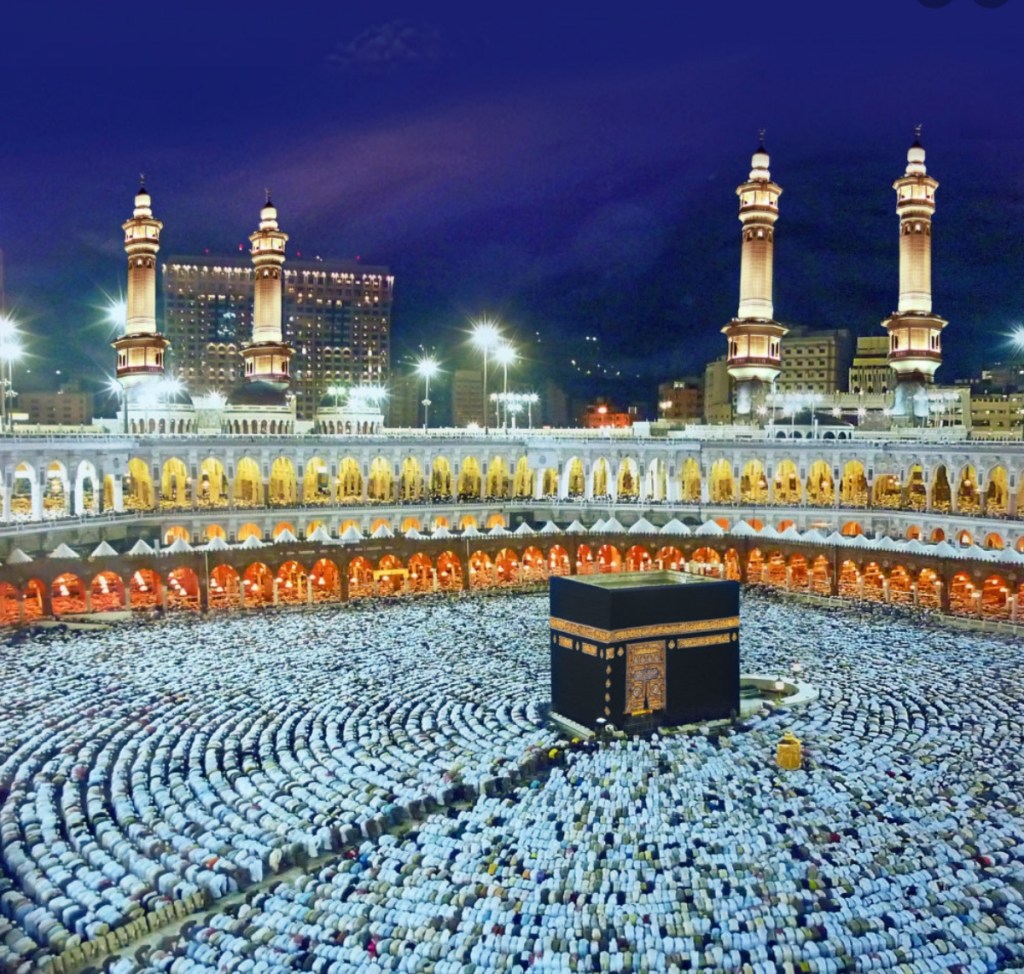
One of the best deeds that one can do during these ten days is to perform Hajj to the Sacred House of Allah. In the words of the Prophet (peace and blessings of Allah be upon him): “An accepted Hajj brings no less a reward than Paradise.”
May Allah accept every one of them who are intending to perform Hajj this year and also bless us we can perform Hajj.
Sincere repentance. One of the most important things to do during these ten days. These are time to repent sincerely to Allah and to give up all kinds of disobedience and sin. When Muslim combines sincere repentance with good deeds during the days of most virtue, this is a sign of success, in sha Allah.
Allah says: “But as for him who repented, believed and did righteous deeds, then he will be among those who are successful.” [al-Qasas 67].
These 10 days are the days of good deeds in general. By doing good deeds we can earn the pleasure of Allah and reward which will Allah multiplied many times because of these virtuous days, and we need of it most in hereafter.
Do more good deeds in general, because good deeds are beloved by Allah and will bring a great reward. If it is not possible to go to Hajj should occupy oneself at these blessed time by worshipping Allah, by salaat, reciting Qur’an, dhikar of Allah, making lots of supplication, giving charity, honouring parents, upholding the ties of kinship, enjoining what is good and forbidding what is evil, and other good deeds and acts of worship.
As the Qur’an says: “So whosoever does good equal to the weight of an atom, shall see it, and whosoever does evil equal to the weight of an atom, shall see it.”[al-Zalzalah 7-8].
There is much to be gained, so make the most of the opportunity afforded by these invaluable and irreplaceable ten days.
These ten days include Yawm ‘Arafah (the Day of ‘Arafah), on which Allah perfected His Religion. Fasting on this day will expiate for the sins of two years.
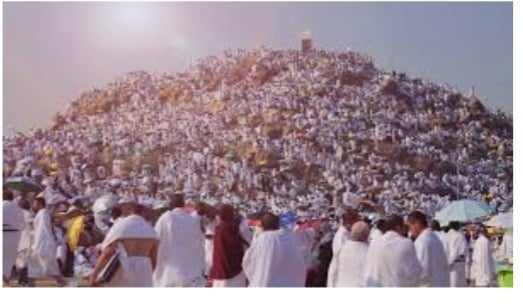
It is a day by which Allah swore an oath.
The Almighty cannot swear by anything except that which is mighty. Yawm ‘Arafah is the “witnessed day” mentioned in the aayah :
“By the witnessing day [Friday] and by the witnessed day [the Day of ‘Arafah].” [al-Burooj 85:3].
It was reported from Abu Hurayrah (may Allah be pleased with him) that the Prophet (peace and blessings of Allah be upon him) said: “The promised day is the Day of Resurrection, the witnessed day is the Day of ‘Arafah, and the witnessing day is Friday.” Narrated by al-Tirmidhi and classed as saheeh by al-Albani.
It is the day of forgiveness of sins, freedom from the Fire and pride in the people who are there.
In Saheeh Muslim it was narrated from ‘Aa’ishah (may Allah be pleased with her) that the Prophet (peace and blessings of Allah be upon him) said: “There is no day on which Allah frees more people from the Fire than the Day of ‘Arafah. He comes close and expresses His pride to the angels, saying, ‘What do these people want?’”
It was reported from Ibn ‘Umar that the Prophet (peace and blessings of Allah be upon him) said: “Allah expresses His pride to His angels at the time of ‘Ishaa’ on the Day of ‘Arafah, about the people of ‘Arafah. He says, ‘Look at My slaves who have come unkempt and dusty.’” Narrated by Ahmad and classed as saheeh by al-Albani.
These days also include Yawm al-Nahar (the Day of Sacrifice), the greatest day of the entire year and the greatest day of Hajj, which combines acts of worship in a way unlike any other day.
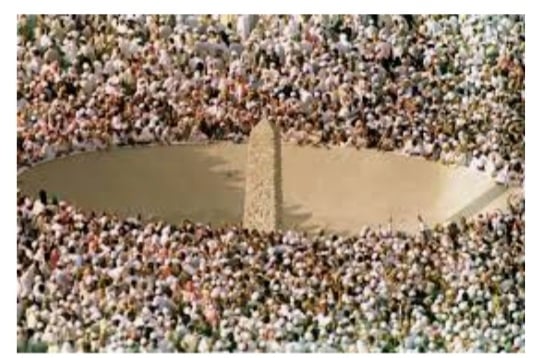
It is the 10th of Dhul Hijjah when pilgrims stone the Jamarāt, sacrifice their animals, shave their heads, and come out of Iḥrām. It is also called:
YAUM AL-ḤAJJ AL-AKBAR.
It has been mentioned in the Qur’an (9:3) with reference to the declaration of disassociation from polytheists proclaimed on that day by ‘Ali (radhi Allahu ‘anh) in front of all the pilgrims gathered from all the various tribes, a year before the Prophet ﷺ went to perform pilgrimage.
Some commentators believe it refers to the day of Arafah, but ‘the day of the greater pilgrimage’ mentioned in the Qur’an is one specific day, and that is the 10th of Dhul Hijjah, as understood by most of the commentators, because that was the day when ‘Ali (radhi Allahu ‘anh ) made that declaration as commanded by the Messenger of Allah ﷺ.
This day of sacrifice celebrated by all Muslim as Eid al-Adhaa , It is, as the Prophet (peace be upon him) said: “The greatest day in the sight of Allah, may He be blessed and exalted, the Day of Sacrifice . . .” (Reported by Abu Dawud; see also Saheeh al-Jaami‘, 1064).
The reason why it is described as the greatest day of the year is that it combines so many acts of worship which are not combined on any other day, such as the Eid prayer, offering the sacrifice, reciting Takbeer (glorifying Allah), and widespread remembrance of Allah. For the pilgrims in Makkah, it also includes offering a sacrifice, stoning the pillars representing Shaytaan, and performing Tawaaf and Sa‘ee.
Unfortunately, bulk of Muslims are ignorant about the significant of these virtuous days. They even don’t know the seriousness of sins in these sacred days. Normal days sin is bad itself and think committed sin during these sanctified days what can bring for us.
May Allah increase our beneficial knowledge and help us to worship Him according to His guidance and give ability to use all precious moments which He set for our benefit.
Majority of Ummah only take Eid is a day of celebration and ignore its another part which is related with ibada. Yes Eid is a day of festival but along with Eid also a day of ibada especially Eid Ul Adha. May Allah give us better understanding and accept our all struggle for good deeds.
Jazak Allah khair
Romana Hoque

